How to Get Smooth, Frizz-Free Hair Without Products or Heat?

We have all experienced that moment of frustration when a perfectly good hair day is ruined by a sudden cloud of flyaways and fuzzy textures. While the beauty industry often points us toward expensive serums and high-heat styling tools, these solutions often create a cycle of damage and dependency. You do not need a cabinet full of silicones to achieve the sleek, polished look you see in high-fashion editorials.
Managing frizz is more about understanding the biology of your hair than it is about masking the problem with heavy oils. By changing how you dry, style, and protect your strands, you can seal the hair cuticle naturally. This approach keeps your hair light, bouncy, and resilient against humidity without the greasy residue that many leave-in products provide.
In this guide, we are looking at mechanical and environmental shifts you can make to your routine today. These methods are gentle on your scalp and incredible for the long-term health of your hair. Let’s look at how you can master your texture using only the tools you already have at home.
Understanding the Root Cause of Frizz

Frizz happens when the outermost layer of your hair, known as the cuticle, is raised. Think of the cuticle like shingles on a roof; when they lie flat, the surface looks smooth and shiny. When they lift, moisture from the air enters the hair shaft, causing it to swell and create that fuzzy appearance.
The main culprits for a raised cuticle are friction, rough handling, and extreme temperature changes. Many of us unknowingly damage this delicate layer while we sleep or while we are drying our hair after a shower. By focusing on keeping those “shingles” flat through gentle techniques, you eliminate the need for artificial smoothing agents.
Hydration also plays a major role, but it starts from within the hair shaft rather than on top of it. If your hair is naturally porous, it will always reach out into the atmosphere for moisture if it feels dry. Maintaining a healthy moisture balance through rinsing techniques is the first step toward a sleek finish.
The Magic of the Microfiber and T-Shirt Method
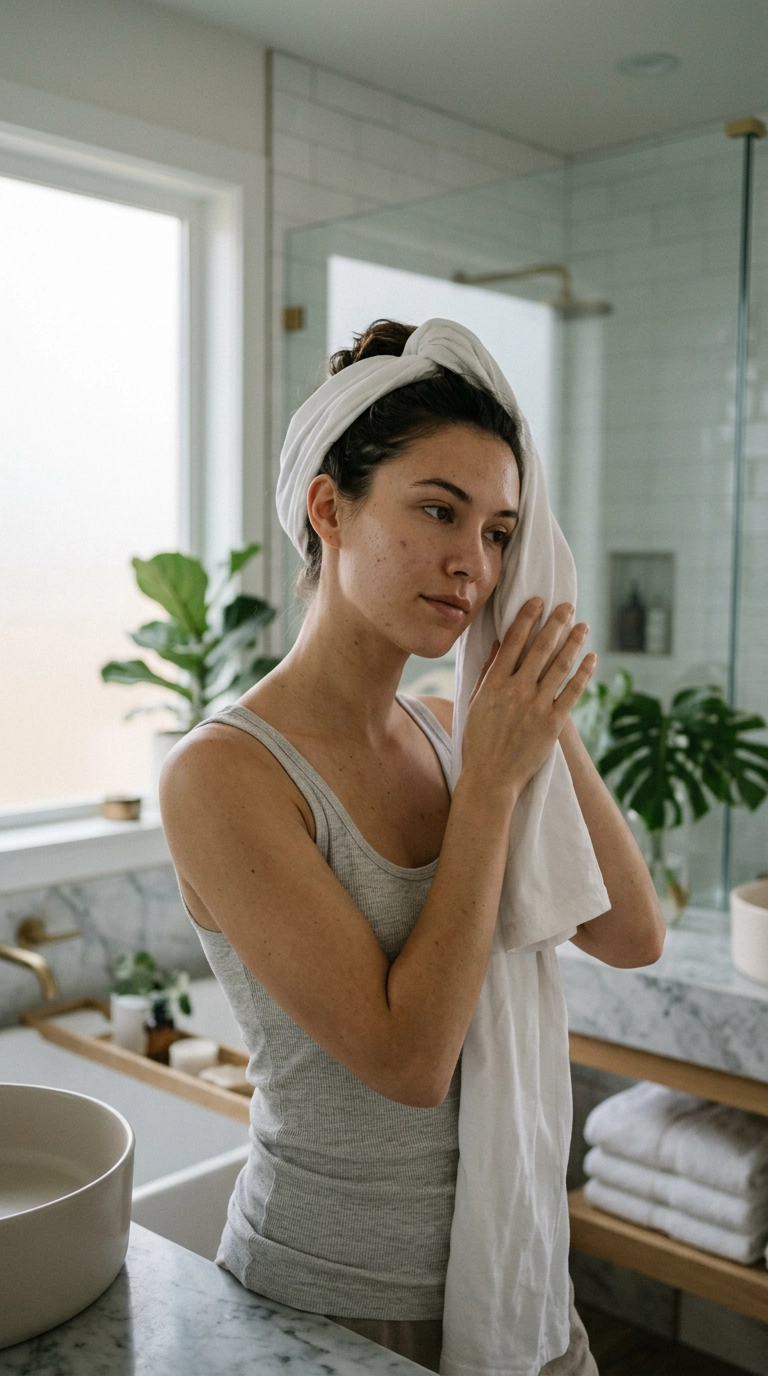
Standard terry cloth towels are one of the biggest enemies of smooth hair. The tiny loops of thread in a traditional towel are designed to absorb water, but they also act like tiny hooks that snag and lift the hair cuticle. This mechanical friction creates instant frizz before you even leave the bathroom.
Switching to a microfiber towel or a plain cotton t-shirt is a simple way to preserve the integrity of your strands. These fabrics have a much smoother surface area, allowing them to soak up excess water without ruffling the hair’s surface. Instead of rubbing your hair, which is a major mistake, you should gently squeeze the water out.
Try the “plopping” technique if you have wavy or curly hair. This involves laying your t-shirt on a flat surface, bending over to place your hair in the center, and wrapping the fabric around your head. This allows the hair to dry in its natural shape while keeping the cuticle undisturbed and compressed.
Step-by-Step Plopping Guide
- Lay a large 100% cotton t-shirt on your bed or a counter with the sleeves closest to you.
- Flip your wet hair forward so it “piles” onto the center of the shirt.
- Take the bottom of the shirt and place it over the back of your head.
- Wrap the sleeves around your forehead and tie them in a knot to secure the bundle.
- Leave it for 20 minutes to absorb moisture before letting your hair air dry the rest of the way.
Mastering the Cold Water Rinse
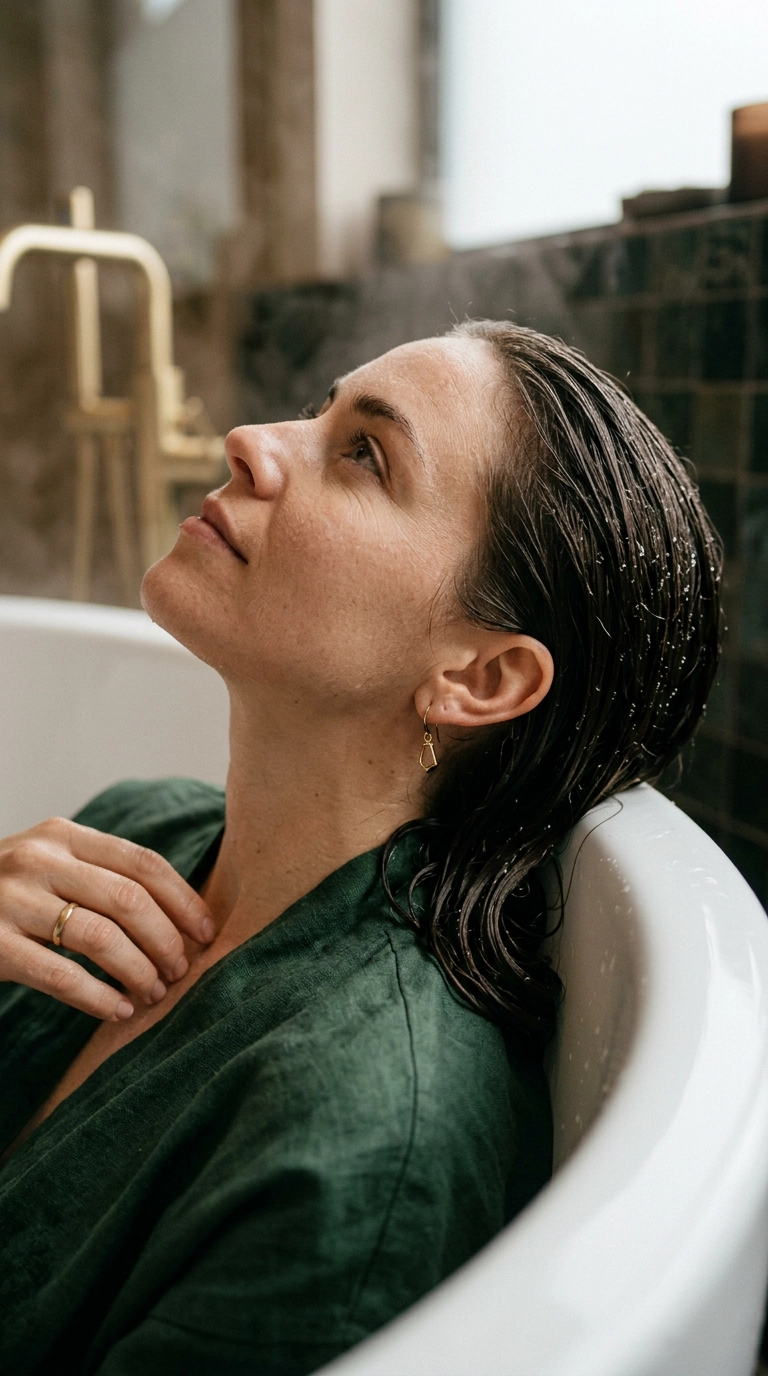
Hot water feels wonderful on the skin, but it is quite harsh on your hair. Heat causes the hair cuticle to expand and open, which is great for cleaning but terrible for finishing. If you finish your shower with a hot rinse, you are essentially leaving the “roof” of your hair wide open to the elements.
The “Arctic Rinse” is a classic technique used by stylists to lock in shine. By turning the temperature down to the coldest setting you can handle for the final thirty seconds, you snap the cuticles shut. This seals in the internal moisture and creates a flat, reflective surface that naturally resists frizz.
This method also helps to stimulate the scalp, which can encourage healthier hair growth over time. You don’t need to take your entire shower in cold water; just a quick blast at the very end is enough to make a visible difference. You will notice that your hair feels much smoother to the touch as soon as you step out of the shower.
Mechanical Smoothing with a Boar Bristle Brush
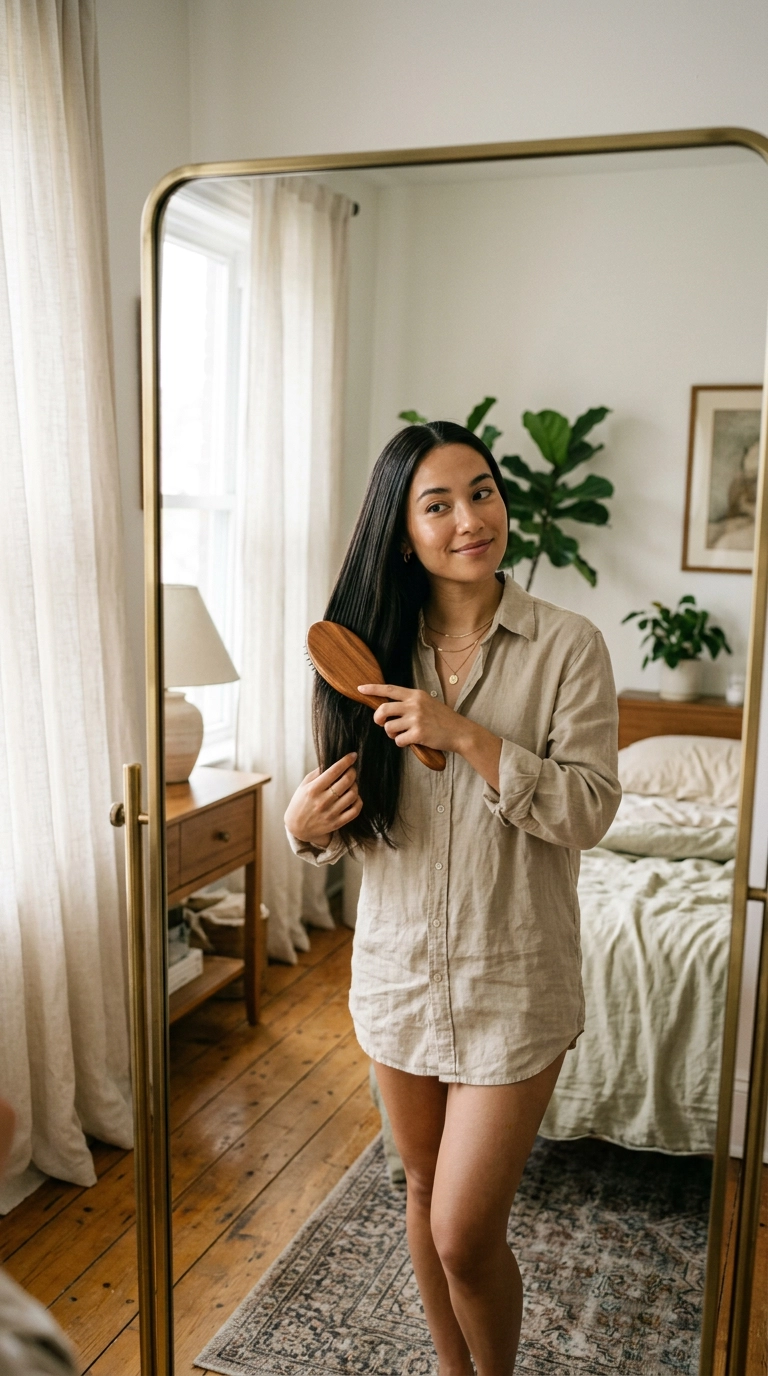
While we want to avoid brushing hair while it is soaking wet, using the right brush on dry hair can actually help distribute natural oils. Your scalp produces sebum, which is the most effective, natural anti-frizz serum on the planet. Most of the time, this oil stays at the roots while the ends of your hair remain dry and frizzy.
A natural boar bristle brush is designed to pick up those oils and carry them down the hair shaft. This process coats each strand in a thin layer of protection that smooths the cuticle and adds a natural luster. It is a mechanical way of “applying product” without actually using anything from a bottle.
Always start brushing from the ends and work your way up to the roots to prevent breakage. Once the tangles are gone, use long, rhythmic strokes from the scalp to the tips. Doing this before bed can significantly improve the texture of your hair by the next morning.
Comparison of Hair Drying Methods
| Method | Impact on Cuticle | Frizz Level |
|---|---|---|
| Terry Cloth Rubbing | Highly Damaging | High | Gentle / Protective | Low |
| Air Drying (Natural) | Neutral | Medium |
| Cotton T-Shirt Plopping | Smoothing | Very Low |
Protecting Your Hair While You Sleep

Believe it or not, most frizz is created while you are sleeping. As you toss and turn, your hair rubs against your pillowcase, creating static and friction. This not only roughens the cuticle but can also lead to breakage and split ends, which only makes frizz look worse over time.
The easiest fix is switching to a silk or satin pillowcase. Unlike cotton, which is a rough and absorbent fiber, silk allows the hair to glide over the surface without snagging. It also doesn’t strip the natural moisture from your hair, ensuring you wake up with strands that look just as smooth as they did when you went to sleep.
If you have long hair, consider a “pineapple” bun or a loose braid. Securing your hair on top of your head with a silk scrunchie prevents it from being crushed between your body and the mattress. This keeps the hair fibers aligned and reduces the amount of surface area exposed to friction during the night.
The Power of Tension Styling

You can actually “set” your hair into a smooth shape as it dries using tension. This is a heatless way to mimic the effects of a blowout. When hair is damp, it is flexible; as it dries, it holds the shape it was in during the drying process. By using gentle tension, you can encourage it to dry straight and flat.
One popular method is “hair wrapping.” This involves brushing damp hair flat against the curve of your head and pinning it in place. As the hair dries, the shape of your skull acts as a giant roller, smoothing out the waves and flattening the cuticle. Once dry, you unpin it to reveal sleek, straight hair.
Another option is the low bun method. If you want a smooth look with a slight inward curl at the ends, pull your damp hair into a taut, low ponytail and twist it into a neat bun. Let it dry completely in this position. The tension from the twist keeps the frizz at bay while creating a polished, structured wave.
Recommended Tension Styles
- The Crown Wrap: Best for straightening naturally wavy hair without a flat iron.
- Twin Braids: Ideal for creating consistent, frizz-free waves overnight.
- The Silk Scarf Wrap: Perfect for laying down flyaways at the hairline.
- Top Knot: Great for preserving volume at the roots while smoothing the lengths.
Hydration From Within

Environmental factors are only half the battle; the internal health of your hair determines how it reacts to the world. Dehydrated hair is desperate for moisture, which is why it poofs up the moment it senses humidity. Keeping your body hydrated by drinking enough water actually impacts the flexibility of your hair fibers.
Eating a diet rich in healthy fats, such as avocados, nuts, and salmon, provides the lipids your hair needs to maintain its natural barrier. These healthy fats help to lubricate the hair from the inside out, making it naturally more resistant to external moisture. When your hair is “full,” it doesn’t need to seek out water from the air.
Along with diet, consider the humidity of your home. If you live in a very dry climate or use indoor heating, a humidifier can prevent your hair from drying out too much. A balanced environment means your hair cuticle can remain in a neutral, flat position rather than constantly reacting to extremes.
Common Questions About Heatless Frizz Control
Can I really get rid of frizz without any hair oil?
Yes. While oils provide a temporary fix, they often just sit on the surface. By focusing on the cold water rinse and using a boar bristle brush to move your natural scalp oils down the hair, you can achieve a similar effect without any added product.
Is it okay to air dry hair every day?
Air drying is much healthier than blow drying, but it is important to not leave your hair soaking wet for hours. Use a t-shirt to remove as much water as possible immediately so the hair spends less time in its most fragile, wet state.
How long does it take to see results with these methods?
You will notice a difference in the smoothness of your hair immediately after using the cold rinse and t-shirt drying method. However, the long-term health of your hair will continue to improve over several weeks as you reduce mechanical damage.
Does the silk pillowcase actually work?
It is one of the most effective changes you can make. It significantly reduces static and friction, which are the primary causes of “bedhead” frizz. It is a one-time investment that pays off every single morning.
Establishing Your New Smoothing Routine
Transitioning to a heatless, product-free routine is a rewarding shift that lets your hair’s natural beauty shine. By respecting the delicate nature of the hair cuticle and reducing friction, you create a foundation for permanent smoothness. It is about working with your hair rather than fighting against it with heat and chemicals.
Start by swapping your towel and trying the cold rinse during your next wash. These small adjustments require very little effort but offer a significant visual payoff. Your hair will feel lighter, look glossier, and stay manageable no matter what the weather decides to do. Enjoy the ease of a low-maintenance routine that actually delivers results.