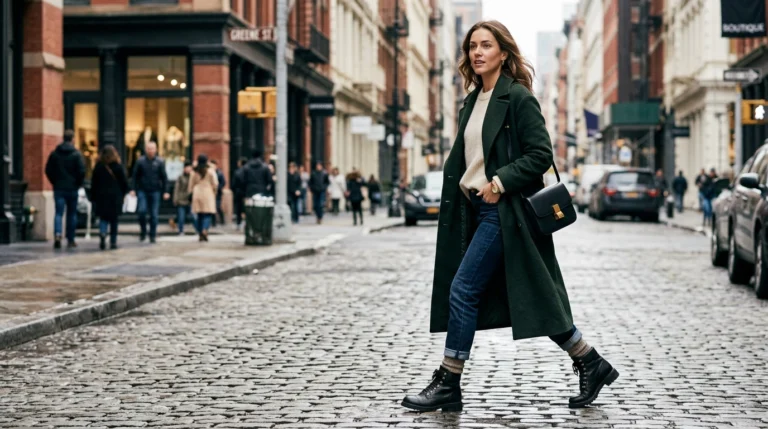
5 Fashion Mistakes Short Women Make With Wide-Leg Pants
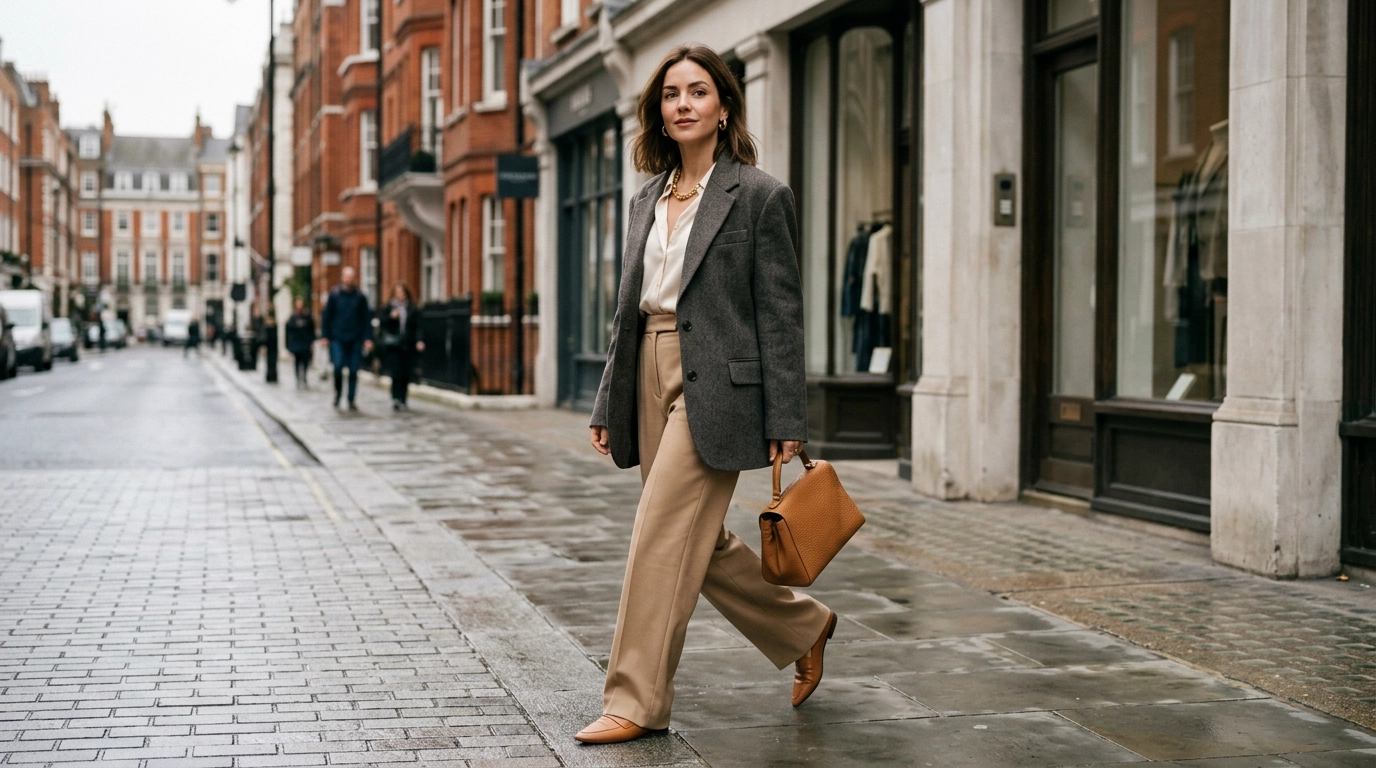
Finding the perfect pair of wide-leg pants often feels like an impossible quest when you are under 5 feet 4 inches. Many women avoid this silhouette entirely because they fear being swallowed by excess fabric or looking shorter than they actually are.
The truth is that wide-leg trousers are actually some of the most flattering pieces a petite woman can own. When styled correctly, they create the illusion of endless legs and a sophisticated, high-fashion silhouette that straight-leg jeans simply cannot match.
If you have struggled with this trend in the past, it is likely because of a few small styling errors that throw off your body’s natural proportions. By adjusting where the waistband sits and how the hem hits the floor, you can master this look with ease.
1. Selecting A Rise That Truncates Your Frame
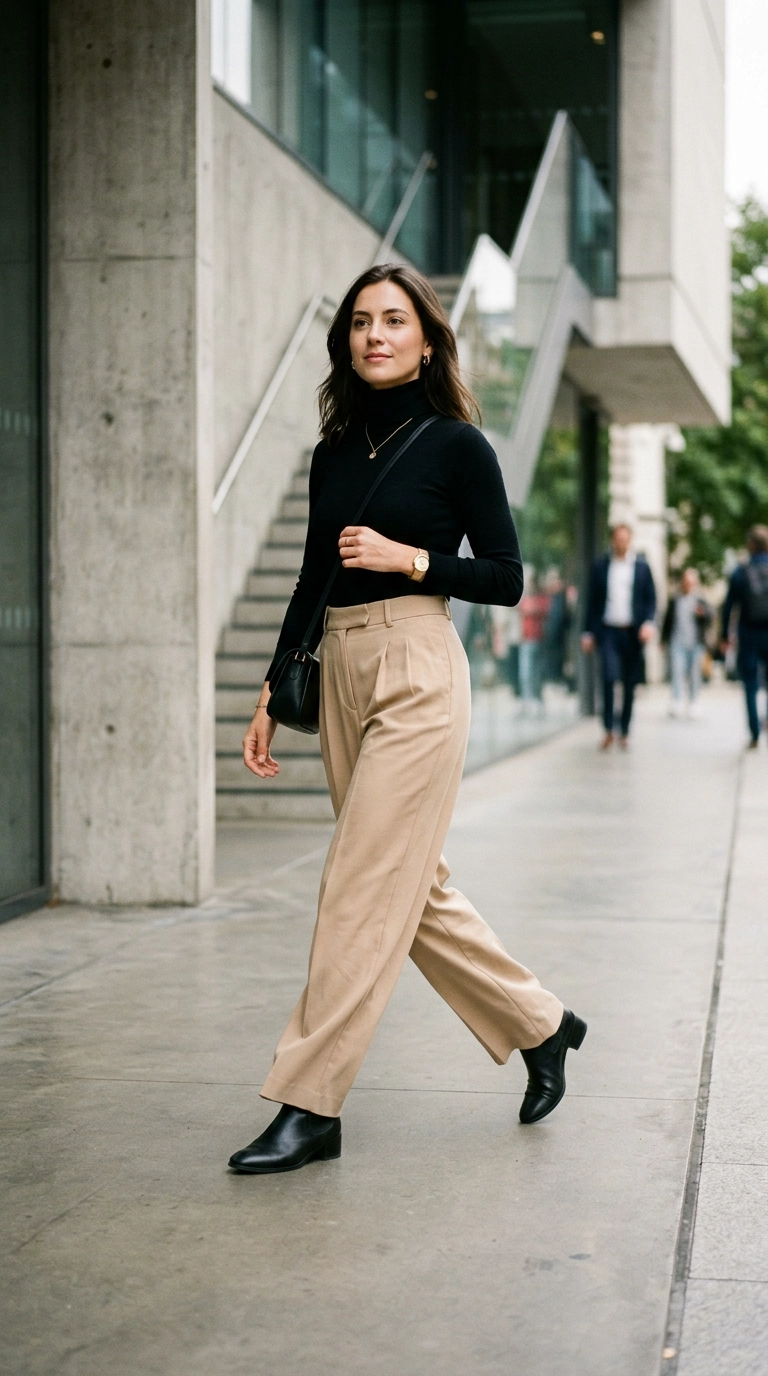
The most common mistake is choosing a mid-rise or low-rise fit. For shorter women, the goal is to create a long vertical line from the waist down to the floor to maximize height.
A high-rise waistband that sits at your natural waist—the narrowest part of your torso—tricks the eye into thinking your legs start much higher than they do. This simple shift in placement adds several inches of perceived height instantly.
The Golden Ratio For Petite Trousers
Aim for a rise of at least 10 to 11 inches depending on your torso length. This ensures the pants cover the smallest part of your waist, providing a clear anchor point for the rest of your outfit.
When the waistband sits too low, it cuts your body in half. This creates a boxy shape that makes your legs look shorter and your torso look unnaturally long, which is the opposite of what we want to achieve.
2. Ignoring The Precision Of The Hemline
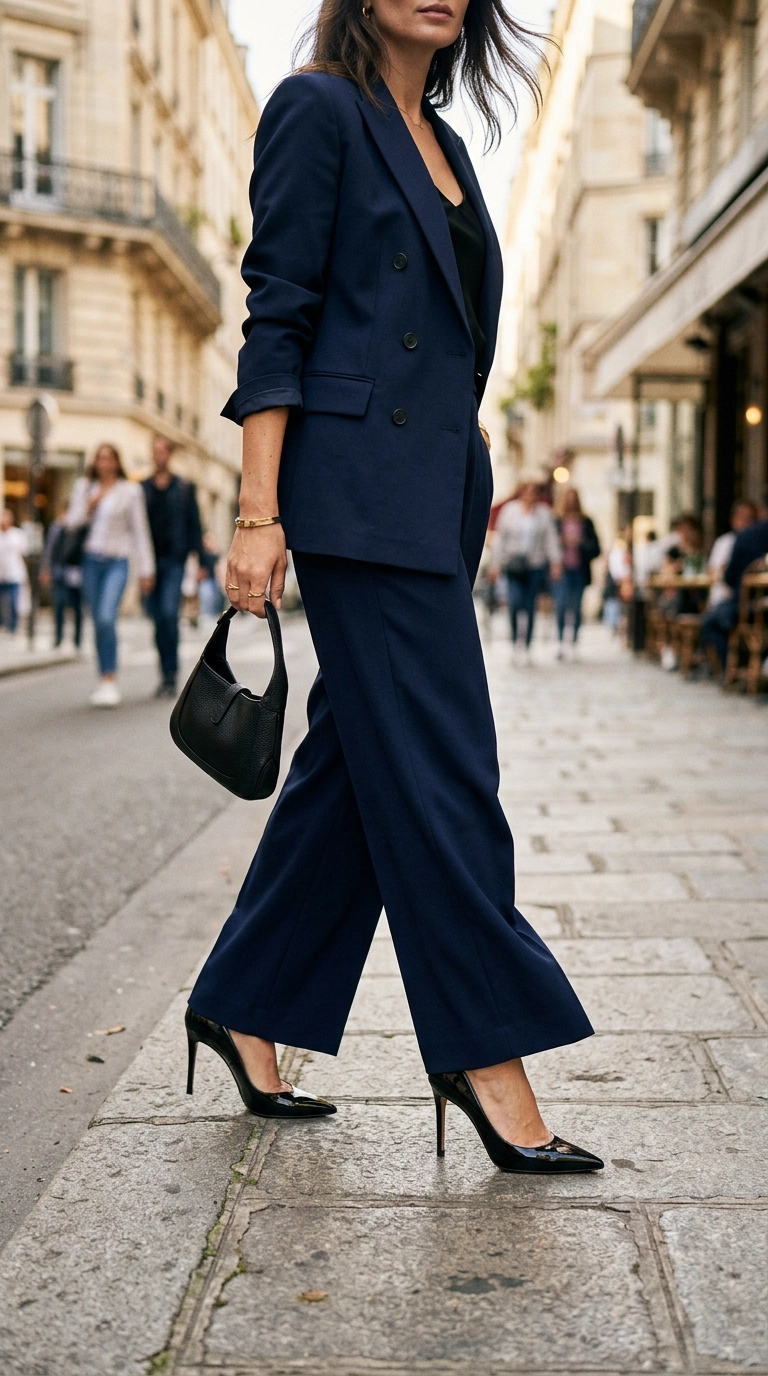
Many petite women either let their pants drag on the ground or hem them so short that they look like “floods.” Both errors ruin the streamlined effect of the wide-leg cut.
If the fabric bunches at your ankles, it creates visual “weight” that pulls the eye downward. This makes you look shorter and can also appear messy or unkempt in a professional setting.
Finding The Sweet Spot
The ideal hem should sit about a quarter-inch to a half-inch off the ground. This allows the fabric to hang straight without dragging, keeping the vertical line clean and uninterrupted.
| Shoe Choice | Ideal Hem Length |
|---|---|
| Heels or Wedges | 0.5 inches from the floor |
| Pointed Flats | Just touching the top of the shoe |
| Sneakers | Slightly above the sole |
Remember that you cannot use the same pair of wide-leg pants for both flats and four-inch heels. You must decide which shoe height you will wear most often with that specific pair and hem them accordingly.
3. Overpowering The Frame With Heavy Fabrics
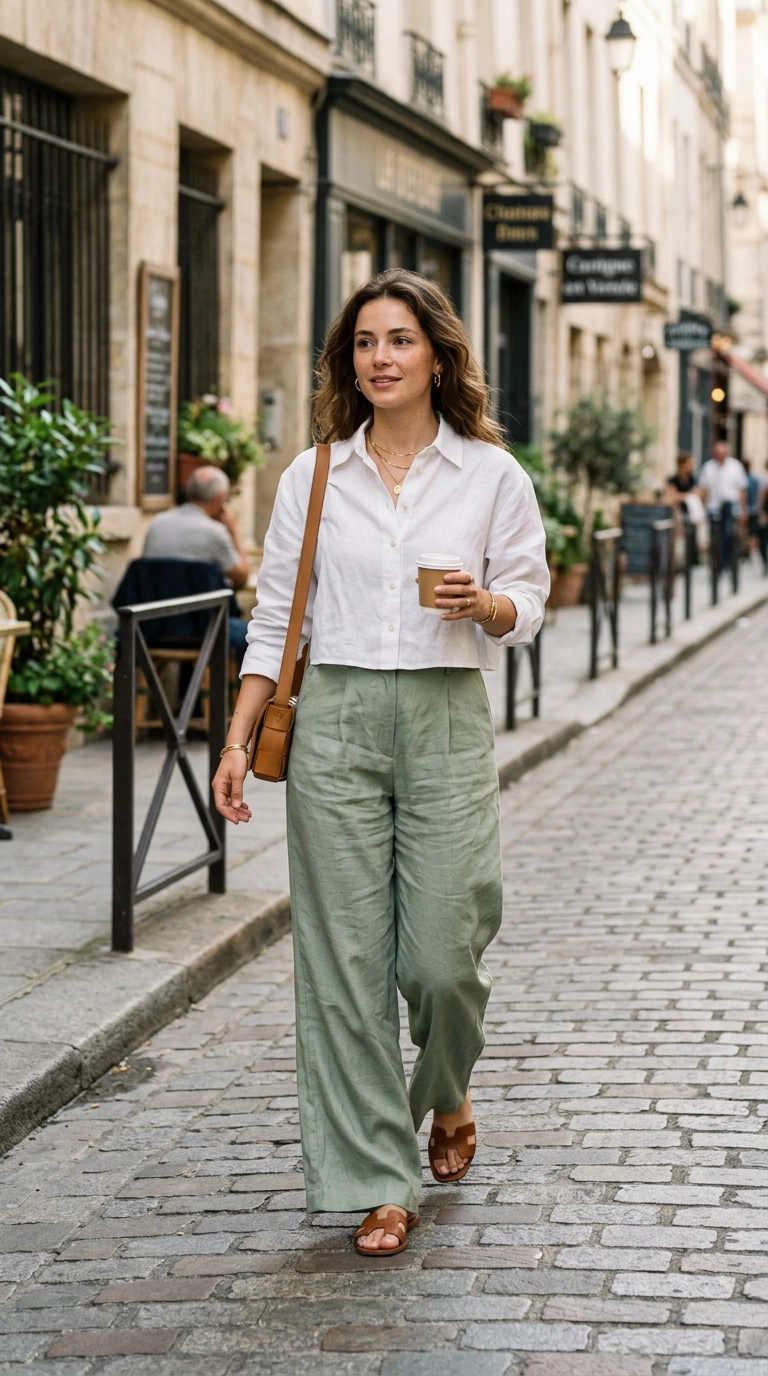
Stiff, thick, or bulky fabrics can easily overwhelm a smaller frame. When the material is too rigid, the pants don’t move with you; they become a static block of color that hides your shape.
Opt for fabrics with a beautiful drape, such as crepe, silk blends, or high-quality linen. These materials skim the hips and flow as you walk, which creates a sense of lightness and movement.
Why Weight Matters
Lightweight fabrics allow the pants to collapse slightly inward when you are standing still. This prevents you from looking like a solid rectangle and ensures your actual silhouette is still visible.
- Avoid heavy corduroy or thick, unwashed denim in wide-leg cuts.
- Choose Tencel or lightweight wool for office-ready trousers.
- Look for “fluid” movements in the fabric when you try them on in the store.
If you prefer denim, look for “wide-leg” styles rather than “huge flare” styles. A subtle wide leg that stays consistent from the hip down is much easier to manage than a dramatic bell-bottom.
4. Wearing Long Or Oversized Tops Untucked
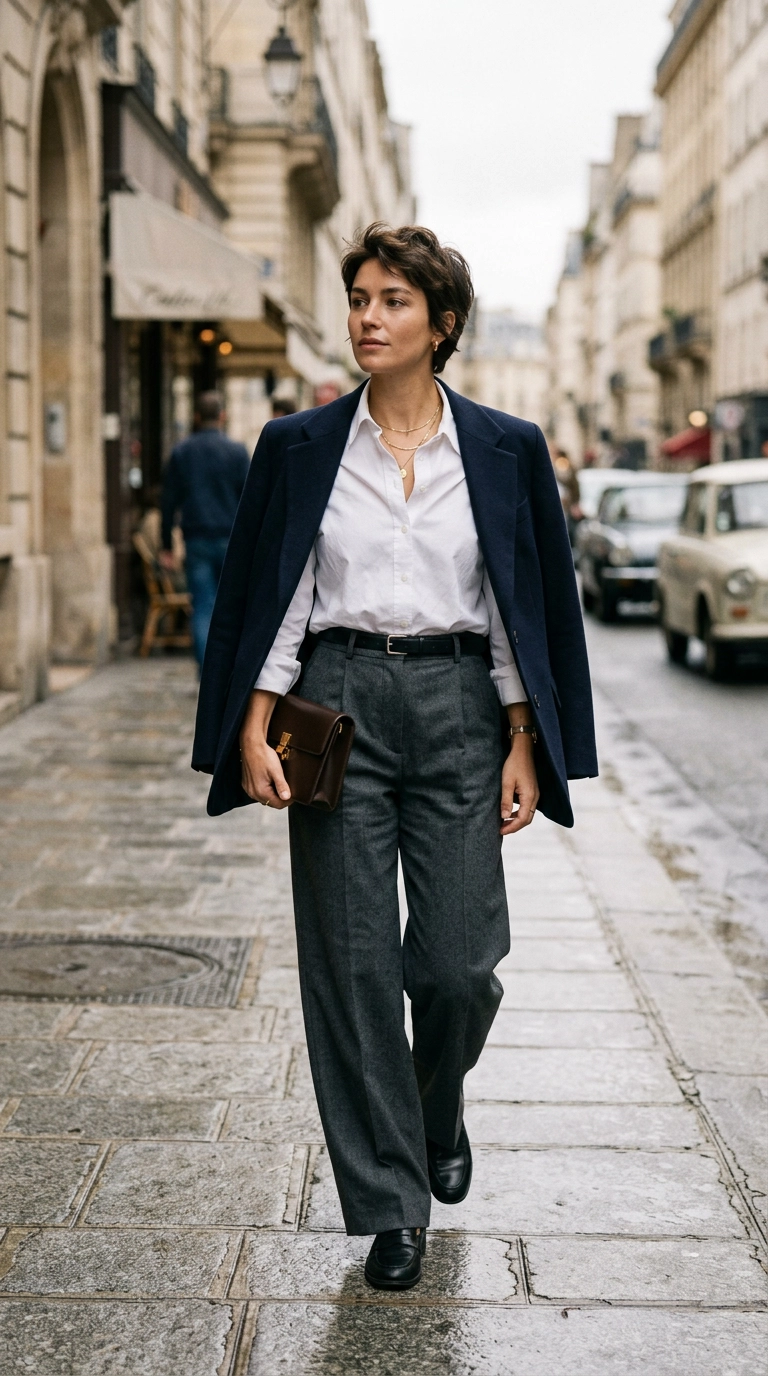
When you pair wide-leg pants with a long, oversized sweater or tunic, you lose all definition of your body. This creates a “column” effect that often makes petite women look wider and shorter.
The key to balancing volume on the bottom is to keep the top half of your body streamlined. This doesn’t mean you have to wear skin-tight clothes, but you must define your waist.
The Art Of The Tuck
A full tuck or a “French tuck” (tucking just the front) is your best friend when wearing wide trousers. This shows exactly where your legs begin and prevents the outfit from looking like a shapeless sack.
If you dislike tucking in your shirts, look for cropped tops that naturally hit at the waistband of your pants. This creates the same proportional balance without the bulk of extra fabric inside your waistband.
Try the 1/3 to 2/3 rule: your top should take up the top third of your visual silhouette, and your pants should take up the bottom two-thirds. This is the most aesthetically pleasing proportion for the human eye.
5. Breaking The Vertical Line With Clunky Shoes
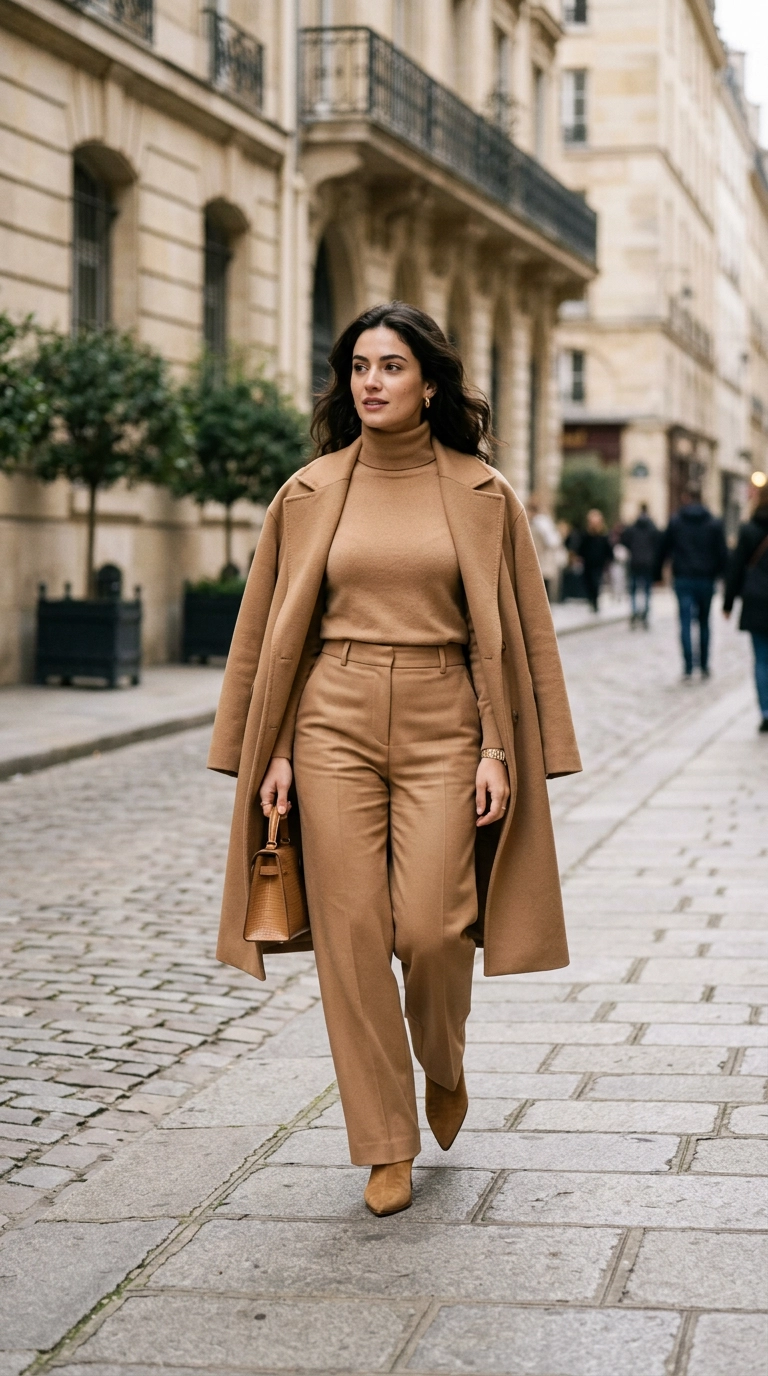
Your choice of footwear can make or break the entire look. Round-toe shoes or clunky, heavy boots often “stop” the eye at the bottom of the leg, shortening the overall appearance.
Pointed-toe shoes are the secret weapon for petite women in wide-leg pants. The point extends the line of the leg by an extra inch or two, even if the shoes are completely flat.
The Power Of Monochromatic Footwear
To maximize the leg-lengthening effect, choose shoes that are a similar color to your pants. If you are wearing black trousers, wear black shoes; if you are wearing beige, choose a nude or tan pump.
This creates a seamless transition from the waist all the way to the tip of the toe. When there is no color break at the ankle, the leg appears significantly longer than it is in reality.
- Avoid ankle straps that cut off the leg if the hem is short enough to see them.
- Steer clear of thick platform sneakers with very wide legs, as they can look “clownish” on small frames.
- Opt for a slim heel or a sleek bootie to keep the silhouette refined.
Mastering The Wide-Leg Look
Wide-leg pants are a sophisticated staple that every woman can wear regardless of her height. By focusing on a high rise, a precise hem, and smart proportions, you turn a potentially difficult trend into your most flattering wardrobe asset. Stop fearing the fabric and start using these tailoring secrets to own your style.